Thank you to our visitors for these great moments shared in 2018!
If you too, you come to Paris, we will be very happy to run with you. Join us and discover Paris with authentic Parisians guides who will take you on the best running routes in Paris and who always have tons of secrets to share with you:
Running, understanding, having fun!

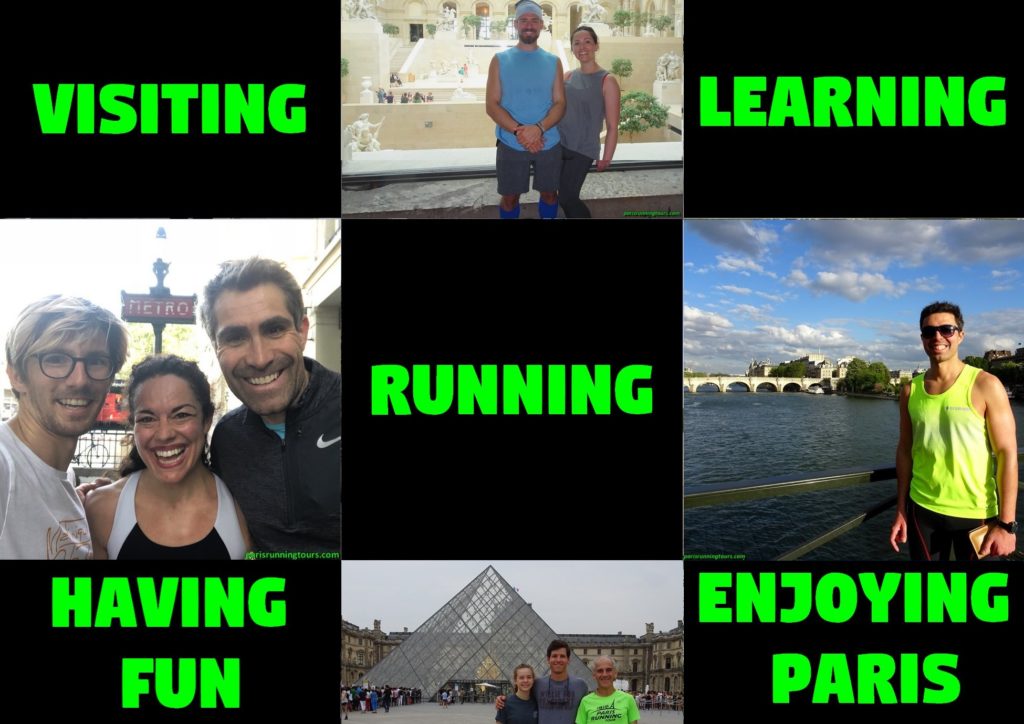
At Paris Running Tours, we love to run in Paris with the runners of the entire world. RUNNING in Paris with our guides, it is not simply running, it is also discovering how Paris is designed, how Paris became this great capital, it is discovering many aspects of Paris and how the different sites and locations are linked to each other, in a word… it’s UNDERSTANDING the city. Running, understanding, learning while running, it’s HAVING FUN. The miles go fast, your mind kept alive, “listening” to the city. At Paris Running Tours, we do private tours, specially prepared for you. This time, we had the pleasure to welcome a team of thirty young and fast american runners with their coaches. RUNNING, DISCOVERY and FUN were there. Let’s speak their team leader, LeRoy (review published in TripAdvisor): “We brought our high school girls cross country team to France for training, ending our last day with a Paris Running Tour guided run. If you want to measure the quality of a program, stress it to the max, and we did. We were 33 runners, and yet Jean-Charles and Sylvain guided us seamlessly and safely through the City. […] Throughout the event, Jean-Charles and Sylvain pointed out minute details about Paris that we never would have seen from a tour bus. Most importantly, they did a great job keeping us interested. I would highly recommend these guys.” RUNNING UNDERSTANDING HAVING FUN Click on the pictures to enlarge them A big thank to LeRoy and the whole team! If you too, you come to Paris, we will be very happy to run with you. Join us and discover Paris with authentic Parisians guides who always have tons of secrets to share with you:
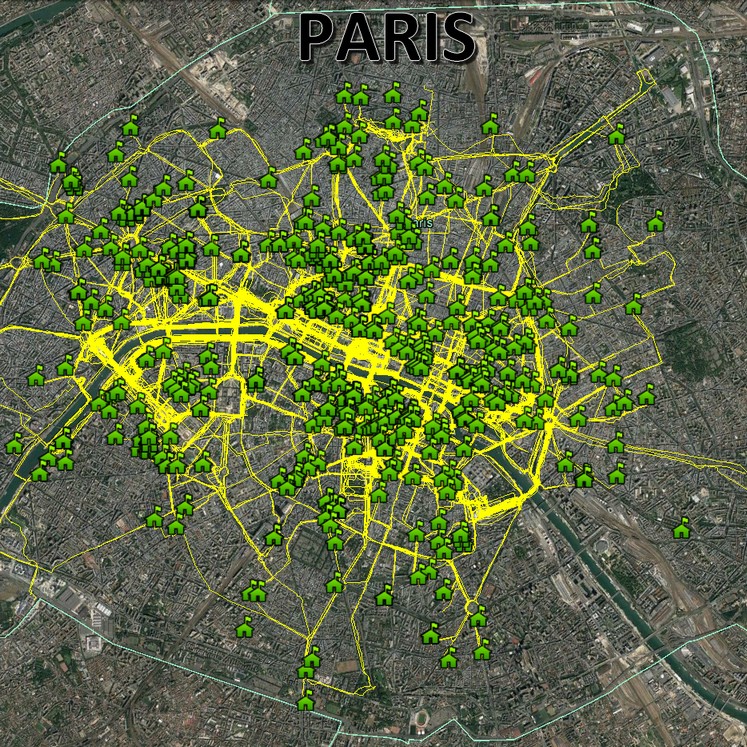
The routes we created for our visitors
VERY HAPPY NEW YEAR 2017

Big thanks to all the runners who came to discover Paris with us in 2016! We wish you all a very happy new year and are looking forward to your visit in 2017. Happy running!
Very happy new year 2016!
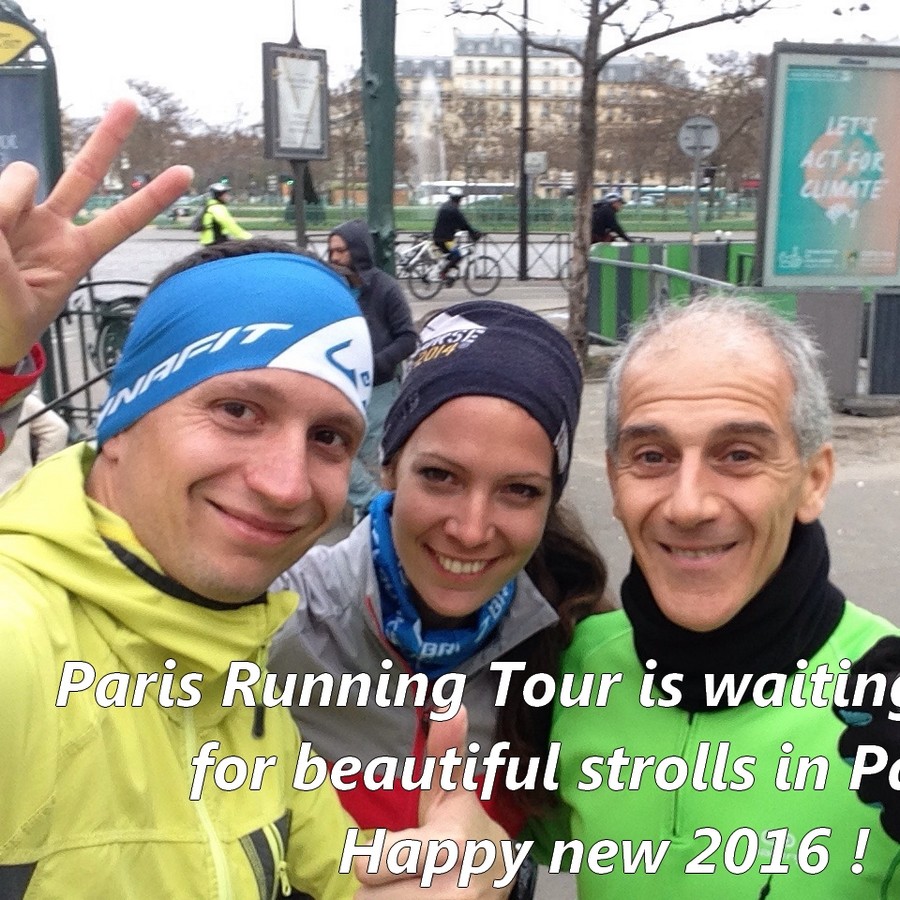
Big thanks to the 300 runners who came to discover Paris with us in 2015! We wish you all a very happy 2016! Happy running!
The oldest monument of Paris with Laura, Marni, Peter, Marshall and Jason
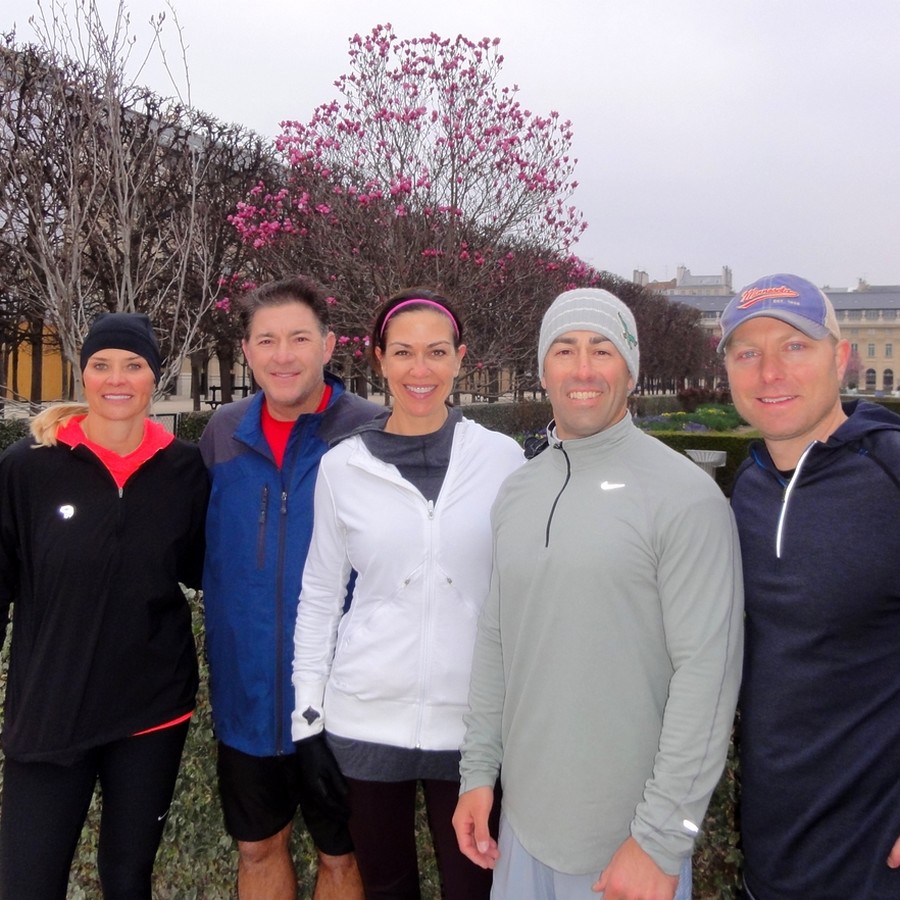
Marni, Marshall, Laura, Jason et Peter – Jardin du Palais Royal 7:00 AM – Marni, Marshall, Laura, Jason and Peter are runners-friends coming from the United States. Paris is still a little bit chilly in this early spring. Magnolias begin to bloom, as here in the garden of the “Palais Royal” (Royal Palace). Our sports visit begins in the garden of the Tuileries to arrive quickly at “place de la Concorde”, in front of the oldest monument of Paris, the Obelisk of Luxor: Jason, Marni, Laura, Marshall and Peter – “Place de la Concorde” – Obelisk of Luxor The Obelisk which we can see in the center of the “place de la Concorde” is more than 3000 years old. It comes from Egypt. The Pharaoh Ramses II had made two obelisks in the entrance of the Luxor temple, temple placed in the center of the old city of Thebes. The obelisk of “la Concorde” is one of them. In 1830, the viceroy of Egypt Mehemet-Ali offers to France the obelisks of Luxor. Then begins, for the first obelisk, an adventure which will last more than 6 years: the preparation of the operation, the cutting down of the obelisk, its transport towards Paris and its erection “place de la Concorde” in 1836, with all the troubles such an expedition can generate (heat, diseases, expectation of the Nile flood, navigation and transport difficulties, etc.) Cutting down of the Obelisk in 1831 (the other obelisk is situated to the left by looking at the temple) Erection of the Obelisk in 1836 “place de la Concorde” (The king Louis-Philippe and 200 000 Parisians attend the “show”) The other part of the “present”, the second Obelisk, remained in Luxor, France not wishing to launch again such an operation! Our visit continues along the Seine, the left bank then the right bank again. We cross the river Seine running on the “Pont des Arts”, the famous footbridge: Marshall, Laura, Marni, Jason and Peter – “Pont des Arts” In the background of the photo above, we can admire the “Galerie du bord de l’eau” of the Louvre. Did you know that in this long corridor, king Henri IV organized fox hunting for his son, future Louis XIII? We finish our running by returning by the garden of the Tuileries, very quiet in this morning of March: Merci Peter, Marni, Marshall, Jason and Laura ! The route of the tour :
Under the Eiffel tower with Rachel

Under the Eiffel Tower – Far off the Palais de Chaillot and the garden of Trocadéro 7:32 AM – Rachel, from Wales, is a regular runner with very good results… After the running tour in Paris, she arrived recently second woman of a half marathon. At present, she prepares for the next London Marathon. In this beginning of March, the sun is with us for an attractive tour of Paris by running. Look at the photo above, we are just under the Eiffel Tower. Early morning in March, the place is very quiet. Compare with the crowd that we can find on Easter Mondays for example or on a summer weekend there… Running early morning in Paris is a delight! Far off, on the other side of the Seine, we can recognize the majestic “Palais de Chaillot” which was built for the World Fair of 1937, last World Fair in Paris. The Palace of Chaillot replaced the Palace of Trocadéro built in the same place, that time for the World Fair of 1878: Aerial view of the “Palais du Trocadéro” – 1934 By the way, do you know what “Trocadéro” means? It is a fort which is situated in Cadiz in Spain and the place of a French victory; France came to help Spain to restore the absolute monarchy in 1823 (the king Louis XVIII reigns at that time in France). The Palace of the Trocadéro built in 1878 (and then the “Place du Trocadéro”) owes its name to a royalist victory! We went for running early, accompanied by the rising sun which lit for us the magnificent monuments of Paris: The Arc de Triomphe. We are in his shadow, the sun beginning to light the Champs-Elysées Palais Galliera Museum of the fashion with until, August 23rd, 2015, the exhibition dedicated to Jeanne Lanvin The Eiffel tower – We are at the “Palais de Chaillot”! The Alexandre III bridge with in the back the statue symbolizing the France of the Renaissance. At the top of the pylon, one of the four Fames: The Fame of the War. These four statues were covered with gold leaves in 1989. The Bridge of the Arts and in the back, the “Galerie du bord de l’eau” of the Louvre – The “Pont des Arts”, known these last years for all the padlocks which where put there by the loving tourists, is at present protected by wooden panels. These panels covered by graffitis spoil a little the beauty of the place. It should be temporary. The Palais Royal and its famous Columns of Buren (“Les deux plateaux”). The “Théâtre Ephémère” (short-lived theater) now disappeared. This wooden theater had welcomed temporarily the troop of the “Comédie Française” during the works of the “Palais Royal”. We can see again the garden of the “Palais Royal” through the columns. The Garden of the Tuileries – Our shadows are still very long! Merci Rachel ! We wish you a great London Marathon! The route of the tour:
Zigzags from Nation to Trocadero, 11 miles by running in Paris with Anne
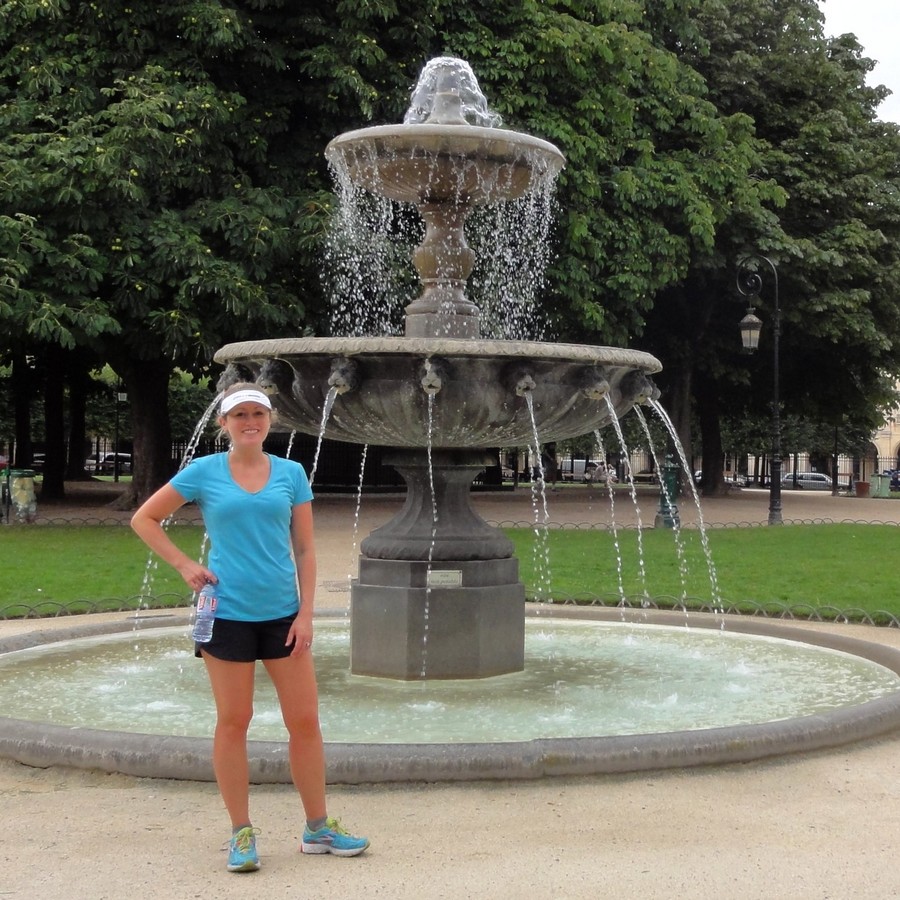
Anne – “Place des Vosges” 9:09 AM – Anne from Washington D.C. (USA) is a regular runner (look at her blog). In this first Monday of August, we had decided to cross Paris by running from east to west. We left a place near the square of “Nation” with the objective to reach “Palais de Chaillot” to take advantage of the beautiful view on the Eiffel Tower offered by the “Esplanade of the Trocadéro”. To go there by the shortest route? No, no, we chose to make a lot of zigzags to be able to appreciate Paris in all its magnificence. In the end, nearly 11 miles of an attractive tourist and sports route. First photo stop: the “Place des Vosges”. Very quiet this morning (photo above). Read here the funny short story of the statue of Louis XIII situated in the center of the garden. Did you know that this Royal place was renamed “Place des Vosges” because this department in the east of France was the first one to pay the tax during the Revolution? From “Place des Vosges”, to join the street Saint Antoine, we took the magnificent shortcut offered by the Hotel of Sully: Anne – “Hôtel de Sully” Still in the “Marais” (right bank), we are going to penetrate the Philippe Auguste’s Paris (by postern Saint-Paul). Indeed, king Philippe Auguste, at the end of the 12th century, before leaving for his third crusade, made build an important protective wall around Paris. Numerous parts of this surrounding wall are still visible nowadays. Below, the longest preserved portion of the wall. Discover here another massive part of the wall, left bank this time, as well as plans representing Paris of this time. Anne – Well of Phillippe Auguste – 12th century (Behind the wall, “Lycée” Charlemagne – High school) Let us cross the Seine to visit the Island of “La Cité”. Look (photo below) at the installations of “Paris-Plages” (Paris-beaches), right bank. Do you see the small red Eiffel Tower? We had spoken about it here and here. Anne – “Paris-Plages” Back right bank, surprise! A metro entrance (Palais-Royal station): Anne – “Métro Palais-Royal” (“Le kiosque des Noctambules” – Jean-Michel Othoniel) Compare this modern art subway entrance installed in 2000 with those created one hundred years earlier, representative of the “Art nouveau” movement: see here some examples of these metro entrances created in 1900. As a matter of fact, the other entrance of the same station, Palais-Royal, just in front of the Louvre, is typically “Art nouveau”. Zigzag, small detour on left bank, “Quai Anatole France”. Just in the opposite, the garden of the Tuileries which we are quickly going to join… Anne – “Quai Anatole France” …crossing the footbridge Léopold-Sédar-Senghor, which gives us a beautiful view on, from left to right, the Louvre, Notre-Dame and the Orsay museum: Anne – Footbridge Léopold-Sédar-Senghor In the garden of the Tuileries, here is a new example of modern art that we meet, a tree in bronze! Anne – “L’arbre des voyelles” (bronze molding installed in 1999 – Giusseppe Pepone) After other numerous discoveries, we finish our running as expected, Esplanade of the Trocadéro: Anne – “Esplanade du Trocadéro” Objective reached! Merci Anne ! The route of the tour :
In front of the Embassy of Texas in Paris with Kristina
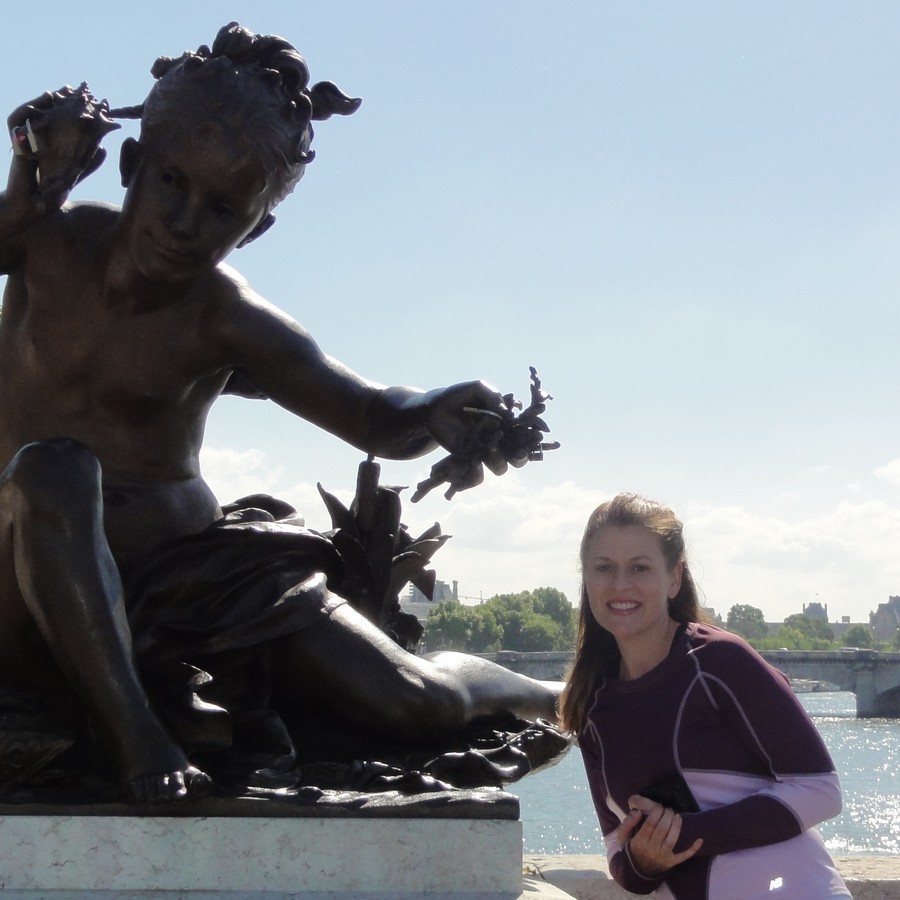
Kristina – Alexandre III bridge – “La fillette à la coquille” (the girl with the shell), sculpted by Léopold Morice 9:55 AM – Kristina lives just in front of Manhattan (New York). We ran and discovered Paris on a beautiful morning of May. The magnificent Alexandre III bridge presents numerous groups of statues. Some evoke diverse representations of the Fame, others, France in various periods of its history. The girl with the shell, which we can see on the photo above, is a member of numerous statues bound to the marine world (the Nereid, the child and the fantastic fish, dolphins and other shells). It is a pity people hung on to it padlocks (look at the hands of the statue by enlarging the photo).. Very close to the place where we started our running, Place Vendôme, we met the Embassy of Texas! Kristina – “Embassy of Texas” Embassy of Texas? Yes, read the plaque which we can see on the building behind Kristina: It is written: “Embassy of Texas. In 1842-1843 this building was the seat of the Embassy of the Republic of Texas in Paris. With the Franco-Texan Treaty of 29 September 1839 France became the first nation to recognize the Republic of Texas, an independant state between 1836 and 1845.” A little farther, after having run in the magnificent Garden of the Tuileries, Kristina – Jardin des Tuileries It is in front of another place of political representation that we stop: Kristina – Palais de l’Elysée – “La Grille du Coq” The Palace of “Elysée”, official residence of the President of the French Republic. Look at the railing which closes the garden of the Palace south side: it is the Railing of the Gallic cockerel. Remember, we had spoken about this cock here. By continuing our road towards the Eiffel Tower, we pass by a street the name of which evokes a city well known by Kristina: Kristina – Avenue de New-York In 1918, this way is named Avenue of Tokio (with one “i” as it was the custom at the beginning of the 20th century). At the end of the World War I, the avenue receives this name because Japan was an ally of France. In 1945, the avenue of Tokio is renamed avenue of New York, the most populated city of the United States, the country which participated in the France liberation (Japan having become an enemy during the World War II). The Palace of Tokyo, very close, built for the World Fair of 1937, kept its name. We were lucky! By going to the Eiffel Tower, the cannons of the garden of Trocadéro throw their powerful water jets: Kristina – Jardin du Trocadéro Merci Kristina ! The route of the tour:
Some small secrets of the Parisian landscapes, with Kara
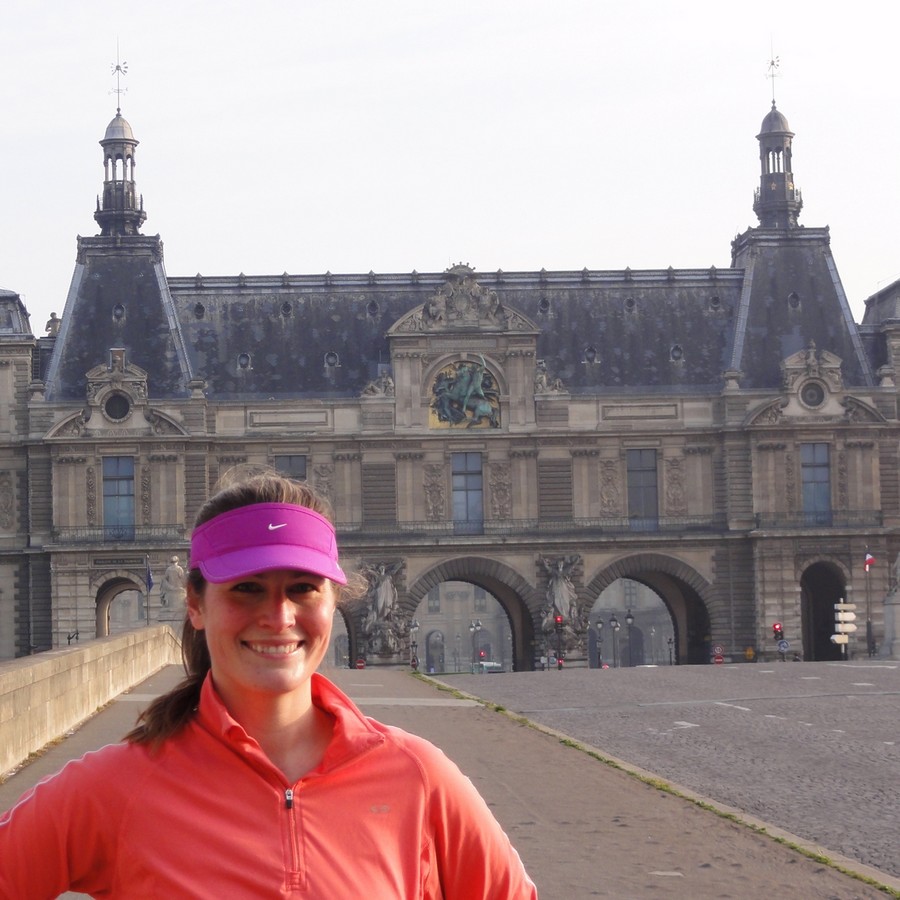
Kara – Bridge of the Carrousel 8:01 AM – With Kara, who comes from Atlanta (USA), we ran on an attractive route of more than 9 km and took advantage of the magnificent landscapes offered by Paris, emphasized by the sun which accompanied us this morning: splendid urban landscapes of Paris, buildings and monuments which revealed us small secrets during our running. For example on this photo of the Louvre taken since the bridge of the Carousel: do you see the lantern stands of the Pavilion of Lesdiguières which is at the right of the photo above? Let us look closer: Lantern of the Pavilion of Lesdiguières Golden “N” decorate the balcony of the lantern as on the one of the pavilion which faces it, the pavilion of Rohan. These “N” placed in the end of the Second Empire in the middle of the 19th century, honor the Emperor Napoleon III. But here, on the pavilion of Lesdiguières, these “N” are back to front! We think that the worker who put them, would have inverted them because of his hostility to Napoleon III! This small secret was discovered during the restoration of the Louvre museum in 1985, more than one hundred years after their installation! On the left, the lantern of the Pavilion of Rohan – On the right, the one of the Pavilion of Lesdiguières Not far from there, the famous Bridge of the Arts. Some tourists call it henceforth the “Love Padlocks” bridge*1… Kara – Footbridge of the Arts It is true that it is about one of the most romantic places of Paris, it would be only by its sight on the Island of the “Cité”. But what do we see if we get closer to the Island, behind the place Dauphine? A bird… A bird… It is one of the Imperial Eagles of the Justice Palace of Paris (Imperial Eagles dear to Napoléon the 1st, notice the “N” under the Eagle…): By pursuing our running in the Louvre, we decide to make a photo in the very beautiful squared courtyard (“Cour carrée du Louvre”): Kara – Cour carrée du Louvre Under our feet you can find the first Louvre, the Medieval Louvre, a fort protecting the West of Paris by strengthening the Outer wall of king Philippe Auguste. If you visit the basements of the Louvre, you can see the foundations of the medieval castle. Here is its representation and a photo of its foundations: Medieval Louvre – Foundations By leaving the Louvre, we go through the garden of Tuileries and its numerous statues: Kara – Garden of the Tuileries Notice for example, on the right-hand side of the photo above, the Statue of the Oath of Spartacus: By continuing along the historical axis of Paris, we arrive Place of La Concorde, magnificent place which really deserves a stop. Kara, “place de la Concorde” – In the axis, the Champs-Elysées with the “Arc de Triomphe” To the right, in the entrance of the Champs-Elysées, a rearing horse: one of the Horses of Marly. A copy of which the original is in the Louvre, original now protected from the vibrations provoked by the heavy machines of the National day military parade. Remember this article: Passing in front of the horses of Marly with Mary If we take a close look, we distinguish green flags. They are the flags of the Paris Marathon that took place five days earlier! Merci Kara ! The route of the tour: *1 The City hall of Paris recently decided to forbid the pose of these padlocks on buildings or bridges of Paris because they threaten and damage these Parisian heritage. Artists are requested to find a respectful replacement to these wild poses (Article France 3 – in French).