
Exploring the North-East of Paris with Sarah
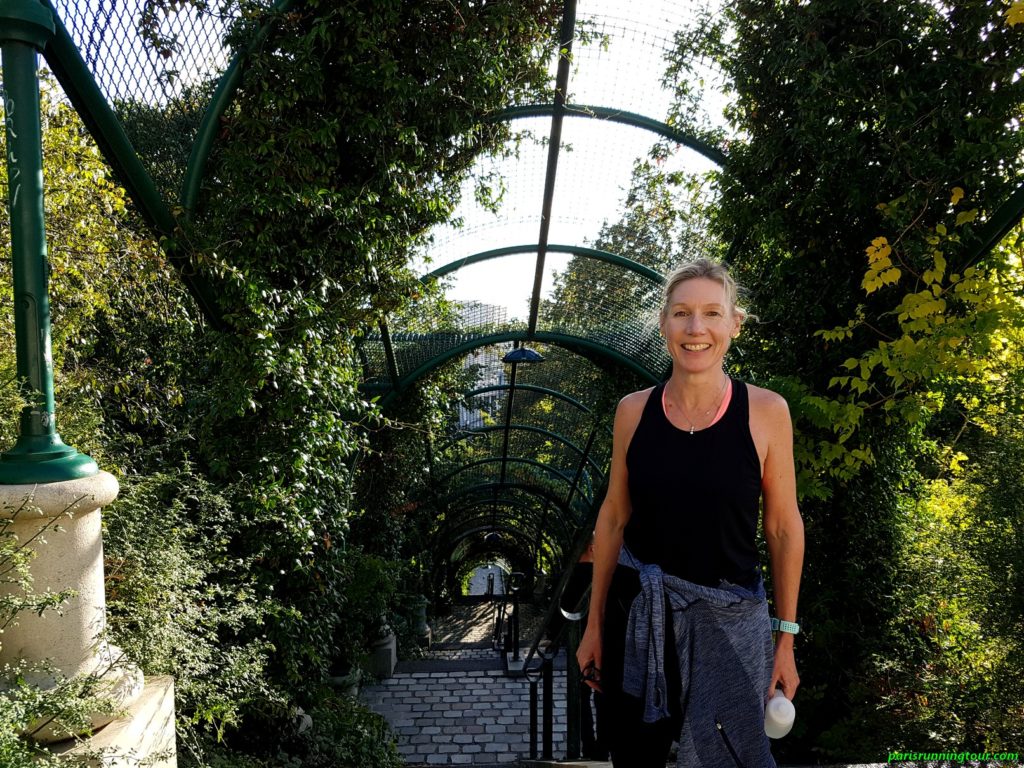
Do you remember Sarah (UK)? We had the great pleasure of meeting Sarah for the eighth time and sharing new places (we always create new routes to discover more of Paris), for example: the eight Paris Running Tours realized with Sarah. We explore all of Paris 😀 Thank you very much Sarah and see you soon for new adventures in Paris! If you too, you come to Paris, we will be very happy to run with you. Join us and discover Paris with authentic Parisians guides who will take you on the best sight running routes in Paris and who always have tons of secrets to share with you:
In front of the rotunda of La Villette with Felicity
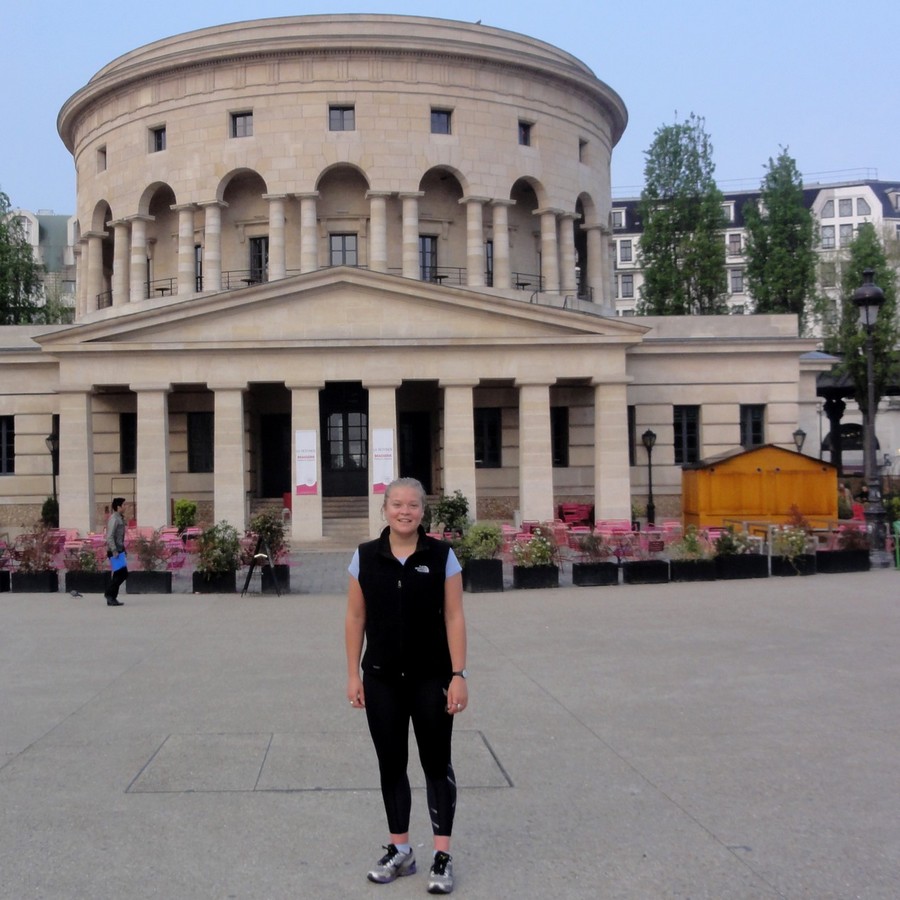
Felicity – Rotunda of la Villette 7:51 AM – Do you remember Felicity from Melbourne, Australia ? (See the post here.) Two years ago, we ran along the river Seine. This time, our route led us to the North East of Paris, since Montmartre up to the Ourcq canal, then to the Saint-Martin canal and to the Grand boulevards. First of all, we followed the former plan of the Wall of the Farmers Generals. Paris grew as an onion, protected successively by various surrounding walls (as for example, Philippe Auguste’s surrounding wall, see the post here). All these walls had a protective function except one: the Wall of the Farmers Generals. The different city walls of Paris The Wall of the Farmers Generals served to collect the tax on all the goods entering Paris (the “Octroi”). Its construction began before the Revolution in 1784, it was destroyed in 1860. At the time, we thus entered Paris by passages, barriers. Most of these barriers contained buildings called “bureaux d’octroi” (“offices of granting”). 61 “bureaux d’octroi” were created by the architect Nicolas Ledoux. There remains of these constructions among which the beautiful rotundas of the Parc Monceau and of the Villette. We can see the Rotunda of the Villette at the beginning of this article. We then followed the Saint-Martin canal, which construction was decided by Napoleon the 1st. Felicity – Saint-Martin Canal A little later, we joined the Grand boulevards and admired the Arc de Triomphe of the Saint-Denis gate, arc created by king Louis XIV, arc dedicated to the consecration of his glory (” Ludovico Magno “!). You will find the history of this Arc de Triomphe and the Grand boulevards in an article of the blog=> here. Felicity – “Porte Saint-Denis” Finally, back to Montmartre, we crossed the Moulin Rouge. Felicity – The “Moulin Rouge” Contrary to the “Moulin de la Galette” (see the picture here), the “Moulin Rouge” was never a real windmill, but from the beginning, a cabaret, this famous cabaret which saw the birth of the “French cancan” and which is always in service. Merci Felicity ! The route of the tour :
By running with Tove and Charlotte on the Ourcq Canal
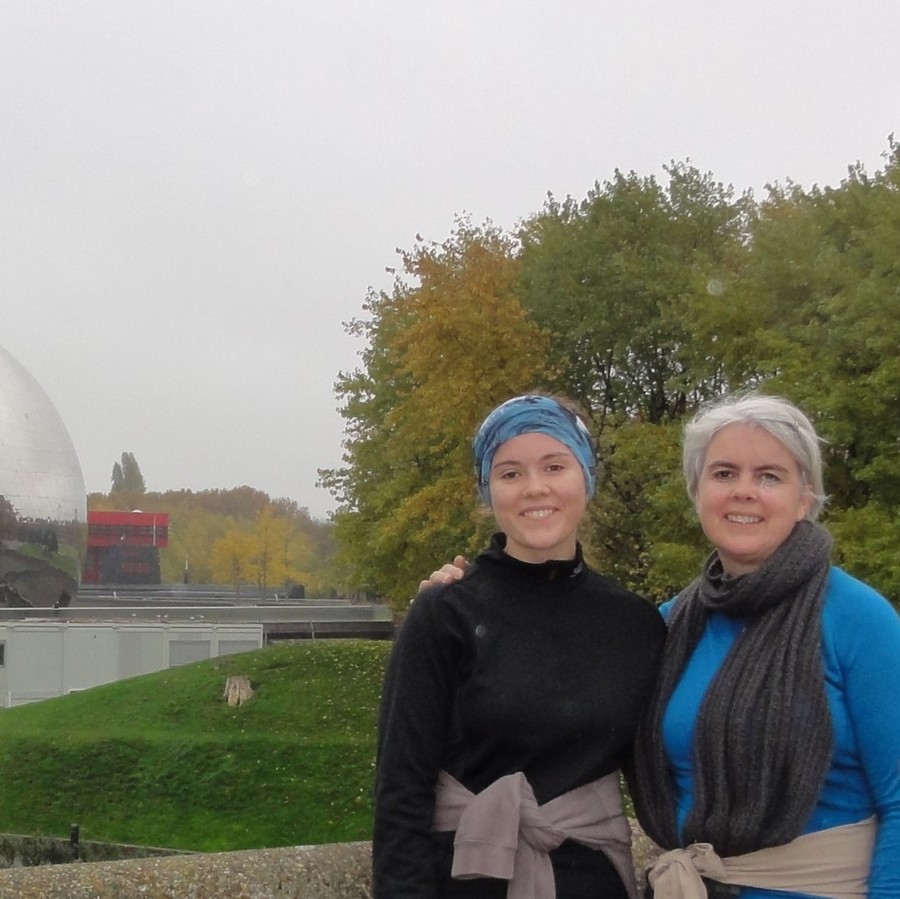
Charlotte and Tove – “City of Sciences and of Industry” – “La Géode” 9:55 AM – Tove lives in Norway; The time of a short stay, Tove came to see her daughter Charlotte who studies in Paris. They know well Paris but wished to discover the Parisian canals. We thus began our visit by running street Lafayette, continued along the Ourcq Canal and the Saint-Martin canal and ended our visit with the “Grand boulevards” and “passages Jouffroy” and “Verdeau”. First amazing discovery, the building at 145, Lafayette street: 145 Lafayette Street Windows, balcony, a door, a roof… A building like any other? No, an artificial building intended to hide a huge air vent of the Parisian subway! Not far, still “rue Lafayette”, a mural painting proposes an original representation of Paris: “Coup de chapeau à Paris” – François Boisrond – 2001 Having left the long Lafayette street, we exceeded the limit of the general farmers’ old wall and the barrier of the Villette with its magnificent rotunda built by Claude Nicolas Ledoux, to find the Ourcq canal. Tove and Charlotte – “Canal de l’Ourcq” – South-West view The construction of the Canal of the Ourcq was decided by Emperor Napoleon Bonaparte in 1802. The Ourcq canal insures a supply of Paris in water by connecting the river Ourcq (more than hundred of kilometers with ten locks). The neighborhoods of the Canal and the district of the Villette were completely renewed from the years 1970-1980, in particular by the destruction of the gigantic slaughterhouses of the Villette in 1974 and by the creation of the “Cité des Sciences” opened in 1986, of the Géode (a huge cinema) opened in 1985 and of the “parc de la Villette“. View of the canal inside Paris from “place Stalingrad” to the “Parc de la Villette” Charlotte and Tove – Ourcq canal – North-East view Having turned back, we ran along a part of the Saint-Martin canal, the other beautiful canal, which joined the Seine. Merci Tove et Charlotte ! The route of the tour :